· por L'équipe EnvoiFaxGratuit
Fax and Veterinary Practice: Prescriptions, Record Transfers, Emergencies
When fax still proves useful between veterinary clinics, laboratories and pharmacies: prescriptions, record transfers, certificates, animal export. Rules, evidence and good habits.
Este artigo ainda não está disponível no seu idioma; aqui está a versão inglesa.

Short answer: a veterinary clinic will not have a medicine delivered on the strength of a fax alone, and an animal export service will not validate a health certificate by fax — but fax remains a daily working tool in four situations. Transferring a medical record to an on-call clinic or a referral centre in the middle of the night, when no secure messaging system is shared between the two practices. Sending a veterinary prescription to a retail pharmacy that has to dispense a human-use medicine prescribed for an animal. Receiving test results sent by a veterinary analysis laboratory that has not yet moved its entire installed base onto a web portal. And exchanging documents with a public authority — French departmental veterinary services (DDPP, DDETSPP), the customs services of a third country — for paperwork that needs a timestamp before a flight or an inspection. For everything else, the rule applies here as anywhere: a fax carries a copy, it does not replace a signed original.
Why veterinary practice is a special case
Veterinary medicine suffers from a fragmentation that human medicine has largely resolved. In human healthcare, France has imposed a single channel: secure health messaging, the MSSanté framework operated under the aegis of the Agence du numérique en santé, and the Dossier Médical Partagé on the patient side. A GP, a hospital and a medical biology laboratory all speak the same protocol.
Nothing of the sort exists on the animal side. There is no equivalent of MSSanté for veterinarians. The practice management systems — Vetocom, Bourgelat, Assisovet, VetoPartner and a dozen others — do not talk to each other. A dog operated on a Sunday in an emergency clinic in Villeurbanne has no record that its regular vet can consult on Monday morning. The transfer of information therefore rests on whatever works without fail: the telephone, email, a USB stick handed to the owner… and fax, which retains two decisive advantages in this context.
The first is universality. Every clinic has a fax number printed on its prescription pad, including those that do not check their generic inbox at weekends. The second is the timestamped trail: a transmission report shows a date, a time, the number dialled and the number of pages received. For an emergency case where the chronology matters — who knew what, and when — that trail is worth more than an unrecorded phone call.
What remains is to work out where fax is legitimate and where it exposes the clinic to real risk.
The four uses where fax still does the job
1. Transferring a record to an on-call service or referral centre
This is the number one use. An owner turns up at 2 a.m. at an emergency service with a cat in respiratory distress. The emergency vet wants to know: current treatment, cardiac history, most recent ultrasound, known allergies, dosages. The regular vet, reached by phone, faxes the record summary and the latest imaging report to the service's line.
What makes the operation acceptable: fax is used to share clinical information, not to create a legal commitment. The medical decision remains that of the emergency vet, who notes in the file the time of receipt and the source of the material. The transmission report kept at both ends documents the chain.
Good practice: send the fax with a named cover sheet stating the animal's name, the species, the owner's name, the number of pages and the name of the sending practitioner. Without that, an on-call clinic receiving sixty pages in one night will not match the sheets to the right patient.
2. A prescription sent to a retail pharmacy
Many veterinary treatments rely on human medicines prescribed under the "cascade" — the mechanism set out in the French public health code when no authorised veterinary medicine exists for the species and condition concerned. The owner then has to go through a retail pharmacy rather than the clinic.
In practice, the pharmacist will often accept a faxed prescription in order to prepare the order — checking the availability of a paediatric dosage, ordering a hard-to-find galenic form — but will require the original signed prescription at the point of dispensing. The fax buys the twenty-four hours of wholesaler lead time; it does not replace the document.
Two important caveats. Narcotics and similar medicines (opioids, certain anaesthetics) are subject to strict secure-prescription rules: never by fax, never as a copy. And for critical antibiotics, the rules stemming from European Regulation 2019/6 on veterinary medicinal products impose named traceability from which fax provides no exemption.
3. Laboratory results
Veterinary analysis laboratories — departmental ones, or private providers such as the large histopathology networks — almost all have a client portal. Almost. Urgent results in serology, bacteriology or cytology continue to travel by fax to rural clinics, and back by fax for follow-up requests.
Here, the concern is legibility. Fax compresses and degrades: a blood count with tightly packed decimals, a biochemistry table, a quantitative PCR curve can all become ambiguous. The safety rule fits in one sentence: if a figure determines a dosage, have it confirmed verbally or wait for the PDF. Many clinics have solved the problem by moving from paper fax to online fax, which delivers a clean PDF to the inbox with no loss of definition — and without the noise of a thermal paper roll.
4. Administrative paperwork and animal export
The export file for a pet travelling to a third country is a nightmare of deadlines: health certificate endorsed by the DDPP (or DDETSPP depending on the department), rabies antibody titration test, proof of antiparasitic treatment, sometimes consular legalisation. Some steps come down to a few hours before a flight.
Fax steps in as a backup channel for sending a missing document to a service that requires it before a cut-off time. It replaces neither the original certificate that the customs officer in the arrival country will examine, nor the European pet passport that the owner must present in person. The same logic applies to an inspection: a faxed report proves the date of dispatch, not the compliance of the premises.
Confidentiality: what the GDPR changes (and what it doesn't)
A veterinary record contains personal data about the owner: name, address, telephone number, sometimes bank details or evidence of financial hardship where an assistance scheme is involved. That data falls squarely under the GDPR. The animal's data, by contrast, is not "health data" within the meaning of Article 9 — a cat is not a data subject — which lightens the legal regime compared with human medical faxing.
Lightens, but does not exempt. The CNIL expects a data controller to choose technical measures appropriate to the risk. Three practical obligations follow.
Do not leave an incoming fax machine freely accessible. A fax machine sitting in the waiting room, next to the scales, prints names and addresses in full view of clients. If the device stays, it belongs in the back office, and using a lockable storage cabinet for paper files awaiting filing is simply common sense.
Check the number before every send. Sending to the wrong recipient is the most commonplace and best-documented failure of all. One transposed digit sends a client's record to a garage. The habit to build: call first, announce the fax, have receipt confirmed.
Respect retention periods. The French national veterinary council (Conseil national de l'Ordre des vétérinaires) recommends keeping medical records for several years after the last consultation, in line with the limitation periods for professional liability claims. Fax transmission reports follow the same logic: they are only worth keeping if they can be found again. We set out the applicable retention periods in our article on archiving fax confirmation receipts.
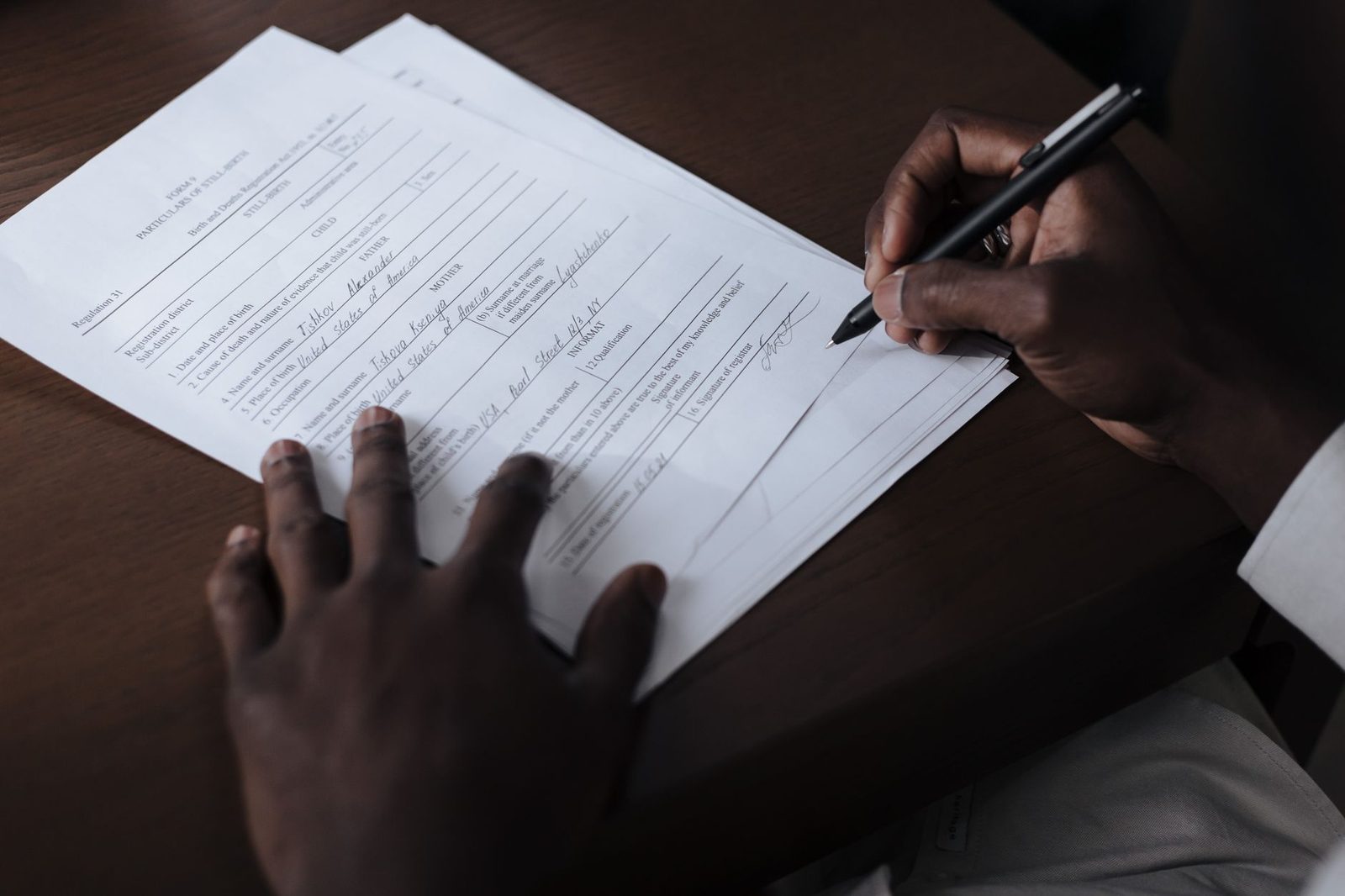
What a veterinary fax is worth in a dispute
Veterinary disputes do happen: dosage errors, delayed diagnosis, an animal dying after a procedure, disagreement over an estimate. Before a civil court, fax enjoys no privileged status. It is prima facie evidence assessed freely by the judge, like any document not signed electronically.
In concrete terms, a transmission report establishes that a message left one line for another at a given time, with a given number of pages. It does not establish the content of those pages. Hence the practice that makes all the difference: always keep the pair — document sent + transmission report — stapled together or linked in the same digital file. An online fax service does this automatically by attaching the sent PDF to its receipt.
Three useful reinforcements when the stakes are real:
| Stakes | Fax alone | Recommended reinforcement |
|---|---|---|
| Urgent clinical information | Sufficient | Note the time of the call in the record |
| Estimate or informed consent | Insufficient | Owner's signature, paper or electronic |
| Formal demand to a non-paying client | Insufficient | Registered letter with acknowledgement of receipt |
| Filing with a public authority | Varies | Check the channel required by the service |
On the underlying question — what evidential weight a judge gives a fax — our feature on the evidential value of fax before a judge sets out the case law and the applicable articles of the civil code.
Moving from a fax machine to online fax in a clinic
Many practices keep a machine purely "for out-of-hours cover". That is the worst of both worlds: an analogue line to pay for, consumables to stock, a device that breaks down on a Saturday evening. The gradual switch-off of the legacy switched telephone network makes that position untenable, and our guide to the end of the PSTN and analogue fax lines explains why.
Switching to an internet fax service solves three problems at once. Incoming faxes arrive as legible PDFs in a shared inbox that the on-call team can check from any workstation. Outgoing faxes are sent from the practice management software, without reprinting a report that is already digital. And archiving becomes automatic instead of depending on a binder.
A few pieces of equipment make the transition painless on the clinic side. An automatic duplex document feeder scanner turns an old paper file into a usable PDF in seconds — essential when taking over a client base. A medical imaging display, or failing that a second, properly calibrated monitor, lets you read a received report without squinting. And for clinics going digital in the consulting room, a tablet with an active stylus serves both to capture a consent signature and to annotate a radiograph before sending it.
One last point that is often overlooked: keep the number. It is printed on prescription pads, business cards, professional directories and the clinic's website. A serious provider allows porting of your existing fax number. If you are relocating the practice, the question needs handling in advance — we cover it in our article on keeping your fax number when a business moves.
Frequently asked questions
Can a pharmacy dispense a medicine on a faxed veterinary prescription?
It can prepare and order, but dispensing rests on the original prescription signed by the vet. The fax is there to get ahead of a supply lead time, not to stand in for the document. Narcotics and medicines subject to restricted prescription are excluded from this practice.
Does a veterinary record contain "health data" under the GDPR?
Not for the animal: the GDPR protects natural persons. Yes for information relating to the owner, which is ordinary personal data. The regime is therefore lighter than for human medical faxing, but security and minimisation obligations still apply.
How long should a clinic keep a fax transmission report?
Align the retention period with that of the medical record it relates to — several years after the last consultation, in line with the limitation periods for professional liability. A report on its own, without the document it accompanies, is worth almost nothing.
Can an export health certificate be faxed?
For a preliminary administrative exchange, yes. For presentation to the authorities in the arrival country, no: only the endorsed original counts, together with the animal's passport. Always check the destination country's requirements and the instructions of the competent veterinary service before booking a flight.
Does a fax replace the owner's informed consent before surgery?
No. Consent requires information to have been given and a signature that can be attributed. A signature reproduced on a fax is a copyable image; it does not guarantee the identity of the signatory. Have the form signed on the premises or use an electronic signature.
In summary
- The veterinary world has no equivalent of MSSanté: fax fills an interoperability gap between clinics, laboratories and out-of-hours services.
- Four legitimate uses: emergency record transfer, a prescription to be prepared at a pharmacy, laboratory results, a document to be timestamped for a public authority.
- Never by fax: narcotics, signed informed consent, the original export certificate, a formal demand to a client.
- On the evidence side, fax is prima facie evidence: always keep the document sent and its transmission report, linked together.
- A named cover sheet prevents records getting mixed up in an on-call service receiving dozens of pages a night.
- Online fax does away with the analogue line, the loss of definition and manual filing — and lets you keep the number printed on your prescription pads.