· by L'équipe EnvoiFaxGratuit
Digitising Your Paper Documents Without Losing Their Legal Value
Scanning a contract, a fax or a letter is not enough to create a reliable copy: here is the method that complies with the NF Z42-026 standard and Article 1379 of the French Civil Code.
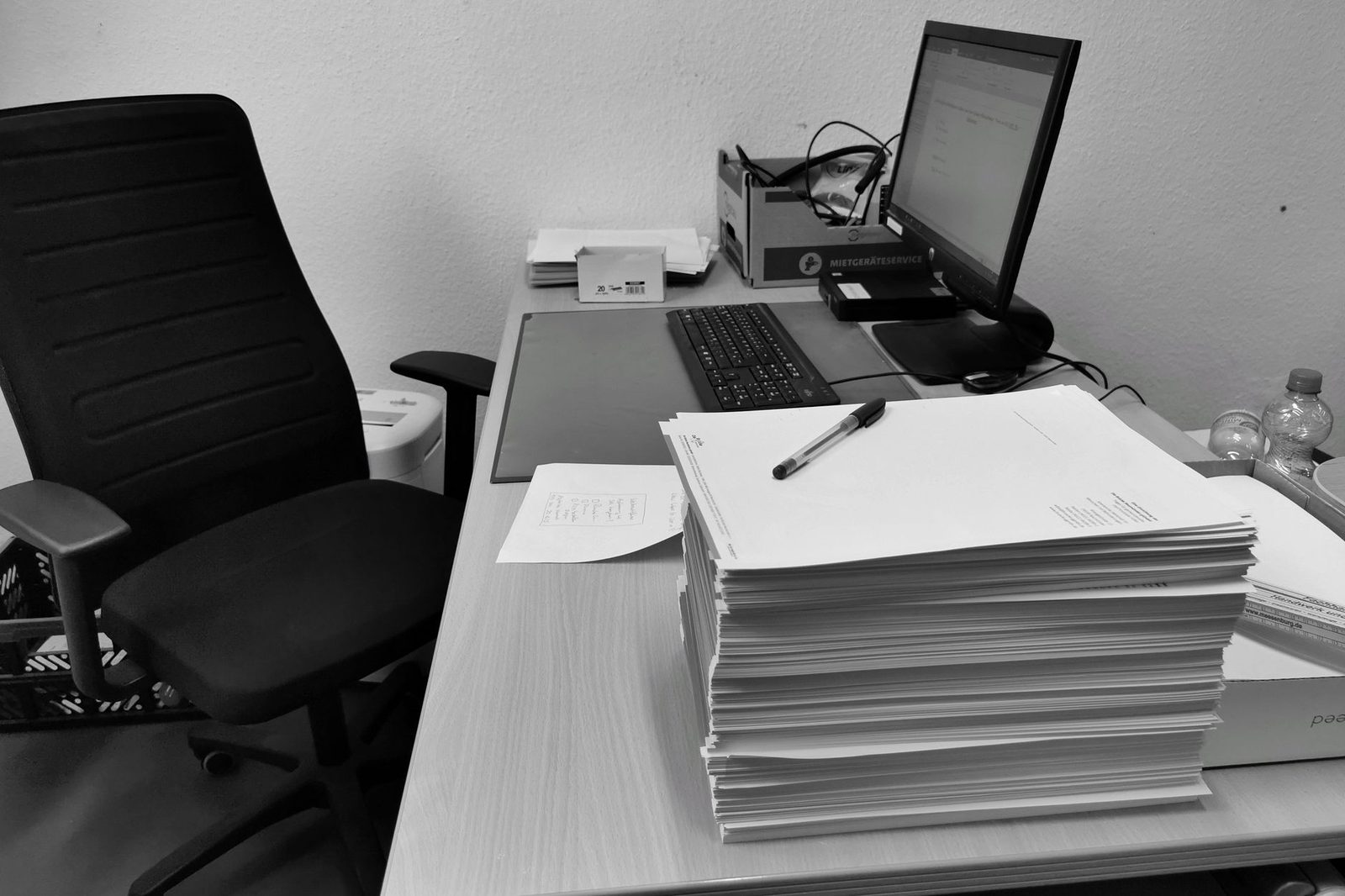
Short answer: scanning a document does not automatically create evidence. Since the reform of French evidence law, Article 1379 of the Civil Code grants a "reliable" copy the same force as the original — that is, a copy whose integrity and fidelity are guaranteed over time. In practice, this requires five things: a legible scan at sufficient resolution, a durable format (PDF/A), a digital hash calculated at capture, a timestamp and an electronic signature or seal applied by a qualified service, and a digitisation log tracing who scanned what and when. The NF Z42-026 standard describes this chain. Anything less gives you a copy that is useful day to day — but before a judge it reverts to a mere prima facie indication that the other party can contest.
The initial misunderstanding: "I scanned it, so I kept it"
The scene is a familiar one. A company decides to clear out its cabinets, hires a skip, spends three weeks feeding files through the multifunction scanner in the corridor, then destroys the paper. Two years later, a dispute arises over a subcontracting agreement. Opposing counsel challenges the signature appearing on the PDF produced. Nobody can say on what date the file was created, or whether page 4 is really the one from the original contract. The PDF sits in a shared folder where fifteen people have write access. The judge does not dismiss the document — he assesses its value freely, which is another way of saying he gives it very little weight.
This is not inevitable. Since the ordinance of 10 February 2016 rewrote the law of evidence, the Civil Code has clearly distinguished two situations. Article 1379 sets out the principle: "A reliable copy has the same evidential force as the original." And it adds that reliability is presumed — hence not open to challenge, save proof to the contrary — where the copy results from a reproduction process "which entails an irreversible modification of the medium". Decree no. 2016-1673 of 5 December 2016 sets out the technical conditions: integrity, electronic hash, timestamping, and storage under conditions apt to prevent any alteration.
In other words, French law offers you a considerable gift — the presumption — but makes it conditional on a method. The rest of this article describes that method, from the feed tray to the destruction of the paper.
Step 1 — Sort before digitising, not after
The costliest mistake is to digitise everything to the same standard. An evidential chain costs time and money; applying it to meeting notes from 2011 is a waste, and failing to apply it to commercial leases is a risk.
So build a three-column sorting table before you touch the first box:
| Level | Example documents | Handling |
|---|---|---|
| Evidential | Contracts, leases, guarantees, payslips, fax transmission reports, registered letters, minutes | NF Z42-026 digitisation + evidential archiving |
| Operational | Settled purchase orders, routine correspondence, internal reports | Simple PDF scan, filed storage |
| Disposable | Duplicates, drafts, obsolete supplier documentation | Destruction after validation |
The retention period determines the column. The French Commercial Code requires ten years for accounting records and ledgers, five years for articles of association after deregistration; the Labour Code sets five years for payslips on paper and fifty years for the single staff register; documents relating to public procurement or health records follow yet other rules. The service-public.fr website and the entreprise.gouv fact sheets publish up-to-date tables; that is the starting point, not optional reading.
A practical tip: older documents often arrive stapled, folded or bound. Plan for an office staple remover and a supply of sleeves for fragile items, otherwise half the project time will be spent untangling paper in front of the automatic feeder.
Step 2 — Capture cleanly: the hardware decides everything
An illegible scan can never be salvaged. The recommendations from the work of the Fédération des tiers de confiance (FNTC) and the guides of the Direction des Archives de France converge on a few benchmark values:
- 300 dpi minimum for a text document intended to serve as evidence; 200 dpi is enough for routine operational material, but rules out reliable character recognition.
- No black and white for signed items: colour, even compressed 24-bit, preserves ink shades, stamps and handwritten notes that bitonal mode wipes out.
- Systematic duplex scanning, including when the reverse appears blank: a handwritten note on the back of a delivery note has already swung more than one case.
- PDF/A format (ISO 19005), designed for long-term archiving: embedded fonts, no external dependencies, no JavaScript.
On the hardware side, a corridor multifunction device does the job on modest volumes, but beyond a few thousand pages it becomes the bottleneck. A dedicated document scanner with automatic feeder, able to handle duplex in a single pass and detect double feeds by ultrasound, changes the nature of the project: it is precisely double-page detection that prevents a sheet being silently lost in the middle of a forty-page contract.
For bound registers, account books or documents that cannot be taken apart, the feeder solution does not apply. An A3 flatbed scanner or, failing that, a vertical book scanning stand allows capture without breaking the binding. Always check page by page on a control sample: nothing is more frustrating than a batch of three hundred pages discovered to be blurred six months later.
Step 3 — Seal it: hash, timestamp, seal
This is where an ordinary copy becomes a reliable copy, and it is the step that almost everyone skips.
Three operations follow immediately after capture, ideally automated by the scanning software:
- Calculating a hash (a hash function, SHA-256 today). This hash is a mathematical signature of the file: change a single pixel and it changes entirely. It later proves that the PDF produced in court is indeed the one captured on the day.
- Qualified timestamping, issued by a trust service provider. The European eIDAS Regulation (no. 910/2014) provides that a qualified electronic timestamp enjoys a presumption of accuracy of the date and of integrity of the data. ANSSI publishes and maintains the French list of qualified providers — it is the only list that counts.
- The electronic seal of the legal entity or the signature of the person responsible for digitisation, which ties the batch to an identity rather than to an anonymous workstation.
Without these three elements, you have a file. With them, you have an exhibit.
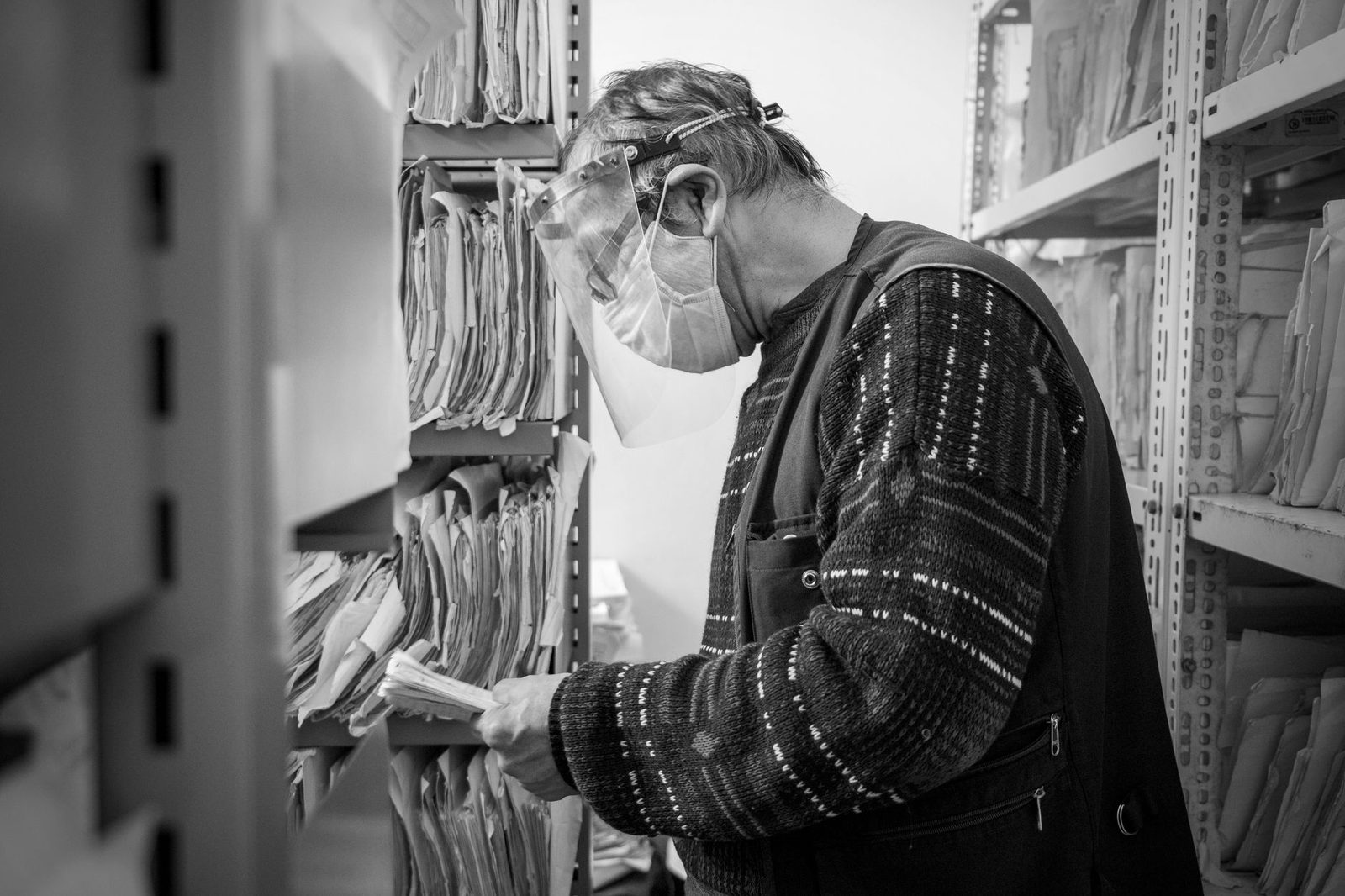
Step 4 — Document the chain: the log and the evidence agreement
The NF Z42-026 standard, published by AFNOR, defines the procedures for the faithful digitisation of paper documents and for their possible destruction. It requires two deliverables that are often overlooked.
The first is the digitisation log: a file, itself timestamped and sealed, recording for each batch the date, the operator, the equipment used, the capture settings, the number of pages, any incidents and the quality checks performed. This log is what your lawyer will produce when the other party objects. It only has value if it has been kept continuously; reconstructed after the fact, it is worthless.
The second is the digitisation policy — also called an evidence agreement when contractually agreed with partners. It sets out in writing what you digitise, under what rules, who is responsible, what you destroy and after how long. It is the document that turns practices into an enforceable procedure. For a micro-business, four pages will do; for a healthcare organisation or a law firm, expect more, and have it reviewed.
Organisations that still receive a lot of incoming faxes would do well to explicitly include that flow in their policy: the transmission report and the received page must follow the same route as paper mail. We cover this specific point in our article on keeping faxes for ten years.
Step 5 — Destroying the paper: the awkward question
Can you throw away the original after digitising? Legally, yes in most cases — with three exceptions you need to know:
- Authentic instruments and documents whose retention in original form is required by law (certain title deeds, negotiable instruments, notarial deeds in paper form).
- Documents bearing a handwritten signature whose authenticity is liable to be contested and for which a handwriting expert's report remains plausible: an expert cannot examine a PDF.
- Items under seal or subject to ongoing proceedings, where destruction would amount to the loss of evidence.
For everything else, destruction is legitimate as soon as the digitisation chain is compliant and documented. It must then itself be traced: destruction slip, date, batch concerned, service provider. And it must be physically serious. A document containing personal data thrown away whole into an office bin constitutes, if third parties can access it, a breach of the security obligation under Article 32 of the GDPR. A cross-cut document shredder rated P-4 or above (under the DIN 66399 standard) is the minimum for HR or medical files; below that, the strips can be reassembled.
A safety period is strongly recommended: keep the paper for three to six months after digitisation, long enough to validate the quality checks and backups. A lockable archive cabinet for this transitional period costs less than a lost batch.
Step 6 — Preserving over time: the real test
Digitisation is not archiving. A perfectly sealed PDF/A sitting on an external hard drive sitting on a shelf is not preserved: it is stored, which is very different.
Evidential electronic archiving, described by the NF Z42-013 standard (taken up internationally as ISO 14641), requires a system able to guarantee integrity over time: redundant copies on separate media, automatic periodic hash verification, management of retention periods with scheduled purging, traceability of all access, and reversibility — the ability to recover your archives and their metadata if you change provider.
Three options exist depending on size:
A certified digital safe for freelancers and micro-businesses; a shared or outsourced electronic archiving system (EAS) for SMEs; an in-house EAS compliant with NF 461 for organisations subject to strong sector-specific constraints.
In every case, test restoration once a year. An archive that has never been restored is a hypothesis, not a guarantee. The same logic applies to local backups: an encrypted external hard drive used as a third, offline copy remains an inexpensive precaution against ransomware, provided you unplug it between uses.

Frequently asked questions
Can a photo taken with a smartphone count as a reliable copy?
In theory, nothing prohibits capture by camera: the 2016 decree targets the result, not the equipment. In practice, an isolated photo stacks up handicaps — variable framing, perspective distortion, no hash, no enforceable timestamp, editable metadata. It is an acceptable stopgap for an operational document, never a basis for digital transition. If you must photograph, use a mobile scanning app that straightens the image, converts to PDF and keeps a log — and keep the paper.
Does digitisation have to take place in the presence of a bailiff?
No, this is neither required nor scalable. A bailiff's report — now issued by a commissaire de justice — retains its value for isolated, high-stakes items, especially where a dispute has already arisen. For a mass project, it is compliance with NF Z42-026 and the keeping of the log that produce the desired effect, at an incomparably lower cost.
Is a reliable copy valid for the tax authorities?
The tax authorities have their own requirements, set out in the BOFiP and the order of 22 March 2017 on the procedures for digitising paper invoices. It notably requires an identical reproduction in colour, retention in PDF or PDF/A format together with a server seal, a hash or an electronic signature, and retention throughout the limitation period for tax reassessment. If you were to apply the full chain to only one family of documents, this would be the one.
What should I do with faxes received on thermal paper?
Absolute priority: thermal paper fades, sometimes within eighteen months depending on exposure to light and heat. Scan it in colour at 300 dpi as soon as it arrives, before legibility degrades, and seal it like any other evidential item. Switching to receiving faxes as PDFs removes the problem at source; our six-step migration plan explains how to go about it without losing any correspondents.
Does the reliable copy exist in other European countries?
The eIDAS Regulation harmonises electronic signatures, seals and timestamps across the Union, but the French notion of a "reliable copy" and its presumption fall under national law. Member States have similar rules without being identical. For documents intended to be produced abroad, check the applicable law or keep the original. Our available countries page lists the zones covered for sending.
In summary
- A copy of a document only has the force of the original if it is reliable within the meaning of Article 1379 of the Civil Code; reliability is presumed when the technical chain complies with the decree of 5 December 2016.
- Sort before you scan: only evidential documents justify the full chain.
- Capture at 300 dpi, in colour, duplex, in PDF/A format, with equipment able to detect double feeds.
- Seal immediately: SHA-256 hash, qualified eIDAS timestamp, electronic seal.
- Keep a digitisation log continuously and write a formal digitisation policy: that is what will be put to the other party.
- Do not destroy authentic instruments, items subject to proceedings, or originals whose handwritten signature may be examined by an expert; trace every destruction and use a suitable shredder.
- Digitising is not archiving: plan for a system compliant with NF Z42-013, test restoration every year, and keep an offline copy.
- If in doubt about a specific document, consult our FAQ or have your policy validated by a legal adviser.