· بقلم L'équipe EnvoiFaxGratuit
Replacing Your Fax Machine: A 6-Step Migration Plan
Retire the fax machine without losing documents or contacts: a six-step migration plan, the PSTN shutdown timetable, number portability and fallback options.
هذا المقال غير متوفر بلغتك بعد؛ إليك النسخة الإنجليزية.
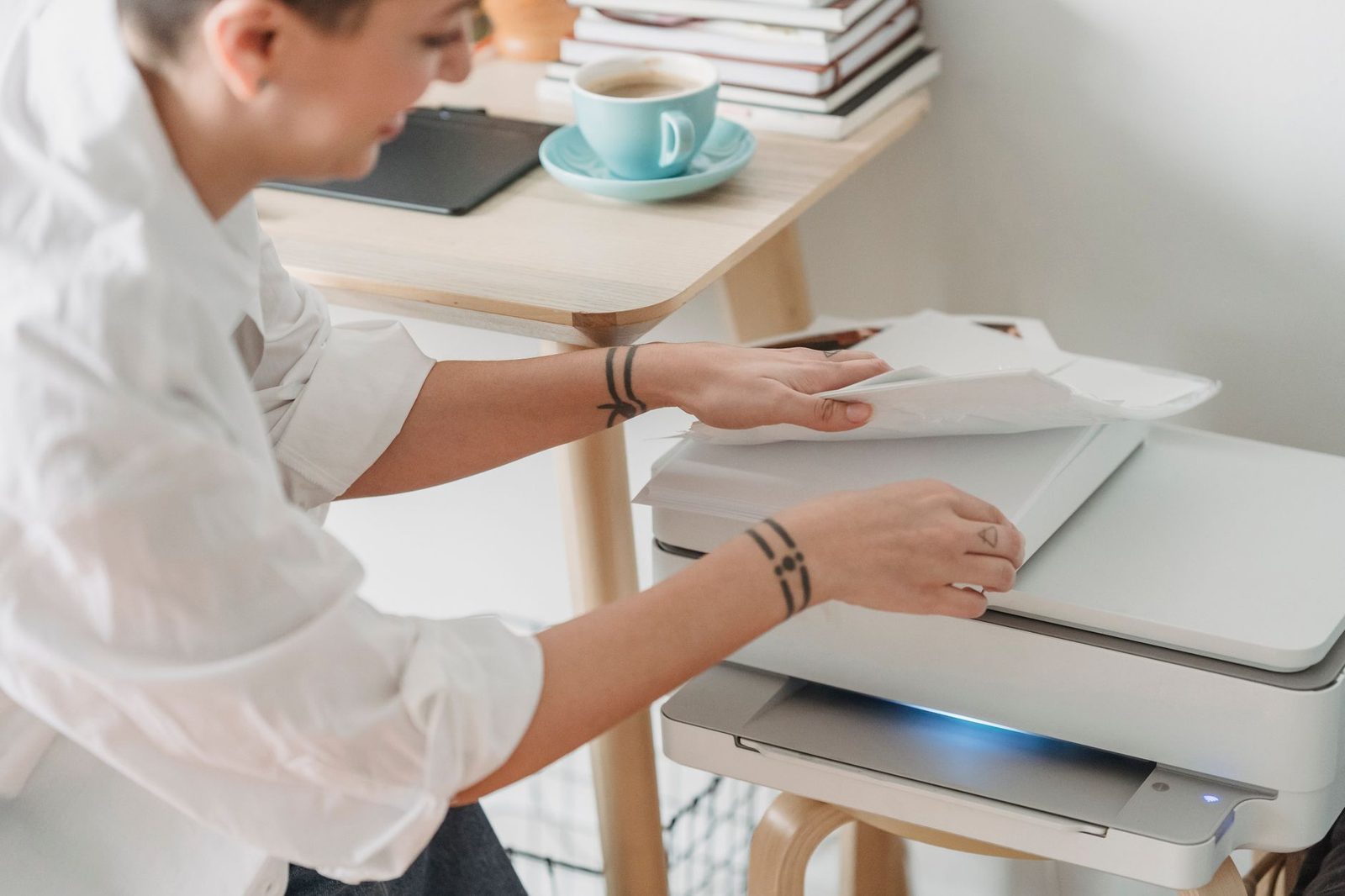
Short answer: you don't unplug a fax machine, you relocate it. A successful migration comes down to six steps: take stock of who actually faxes you, keep your number through portability, switch outgoing faxes to an online fax service, organise PDF reception into a shared mailbox and an archiving space, notify your contacts in writing, then run both systems in parallel for three months before cutting the cord. The classic mistake isn't technical: it's cutting the line without checking that the laboratory, the pension fund or the court on the other end have stopped writing to the old number. A lost fax doesn't bounce back like an email — nobody tells you.
Why the question is coming up now
The technical timetable has done the work in place of IT departments. Since 2018, Orange has been progressively shutting down the switched telephone network (PSTN): an end to sales of new analogue lines, then technical closures area by area, staggered until the end of the decade. Arcep is monitoring this programme and regularly publishes progress reports on the closure batches. In practical terms, a company that still has a fax machine plugged into a wall socket will one day see its line migrated to an IP offer — and an analogue fax over an IP link is not the same thing at all.
The T.30 protocol used by fax machines was designed for a continuous audio channel. Over IP, voice is broken into packets, compressed and sometimes reassembled out of order. The result shows up immediately: failed handshakes, truncated pages, transmissions looping back down to 9,600 bit/s. Operators do offer the T.38 protocol, designed to carry fax over IP, but it requires the entire chain to support it, including at the receiving end. In other words, the outcome depends on a link you have no control over.
Then there are the more mundane reasons. A fax machine consumes toner, paper, a maintenance contract and a dedicated line subscription. It produces documents that sit for hours in a tray accessible to everyone — which, for health data or documents from an employment tribunal case, raises a genuine problem under the GDPR and the CNIL's recommendations on the security of premises and media.
Step 1 — Measure before you decide
Before any decision, you need figures. Most organisations massively over- or underestimate their fax usage, simply because nobody ever looks at it.
Print out the fax machine's activity log (every model keeps one, often printable over 200 to 500 lines) and, if the device is connected to a PBX, ask for a detailed breakdown of calls on that line over twelve months. You are looking for four data points:
| Data to collect | Why it matters |
|---|---|
| Monthly volume sent / received | Determines the subscription tier and whether a free service is enough |
| Top 10 correspondent numbers | Identifies the partners to notify first |
| Inbound / outbound split | A mostly inbound flow means you must keep a reachable number |
| Seasonality | Avoids migrating in the middle of a peak period |
The results are often surprising. Many practices discover they send three faxes a month but receive forty, all from five senders — a laboratory, a benefits fund, an insurance company, a pharmacy, a government body. In that case, the project isn't about "how to send" but "how to receive properly".
Step 2 — Decide the fate of the number
This is the structural decision, and it must be taken early because it drives the whole timetable.
Keeping the number. A fax number appears on letterheads, prescriptions, contracts, professional directories and organisation records in public registries. Deleting it means accepting that documents will vanish into the void for years. Number portability is a right: it lets you transfer a geographic number to another operator, including to an online fax provider that will connect it to a digital inbox. Allow ten days to a few weeks, and have the line's RIO code ready, obtained by dialling 3179 from the handset in question.
Giving up the number. Only worth considering if inbound traffic is close to zero or if your contacts are few and easy to notify individually. Even then, plan for a redirection or an announcement message for six to twelve months — most operators offer this on a terminated line at low cost.
Creating a new number in parallel. This is the comfortable route: you open a virtual fax number, use it for all new exchanges, and let the old one run until your stock of printed letterheads runs out. Slower, but with no break in service.
Simple rule: as long as a printed official document bearing your old number is still in circulation, that number must remain reachable.
Step 3 — Switch outgoing faxes
This is the easiest part, which is why it is often tackled first. Sending from an online service always follows the same mechanics: you upload a PDF, enter the number in international format, and receive a technical confirmation. Our complete guide to sending a fax online covers file preparation and dialling pitfalls; two points are worth repeating in a migration context.
First, the cover page changes status. On a fax machine, it serves to route the document to the right department. In a digital flow, it becomes the piece that ties the document to its transmission report: it must carry the subject, an identifiable sender, the number of pages and the date. That triptych is exactly what a judge looks at, as we explained regarding the evidentiary value of a fax in court.
Second, the transmission report must be captured automatically. On paper, it came out of the printer and somebody stapled it on. Online, it arrives by email or stays inside an interface — and disappears if nobody has decided where to file it. This is the tipping point between a successful migration and a silent loss of traceability.
Step 4 — Organise reception, not just the mailbox
Receiving your faxes as PDFs in an email inbox is the obvious solution. It is also the one that causes the most damage if it isn't properly framed.
Three principles to establish before the switch:
- A named shared mailbox, never a personal one. A fax received at an individual's address becomes inaccessible while they are on leave and disappears the day they leave the company. Create a departmental address (
fax@,frontdesk@) with several authorised recipients and a written list of the people permitted to access it. - Immediate filing in the relevant case folder. An email inbox is not an archive: it gets purged, reindexed, and switches providers. The PDF received must be filed the same day in the patient record, the client file or the document management system, together with its delivery confirmation. This is exactly the reasoning developed in our article on archiving faxes and evidentiary value over ten years.
- Encryption at rest and a defined retention period. The GDPR requires a limited, proportionate retention period; the CNIL points out that data kept "just in case" is data held unlawfully. Set a deadline per document type and enforce it through configuration, not goodwill.
For healthcare professionals, the constraint is heavier still: health data cannot be stored just anywhere, and hosting must be HDS-certified within the meaning of Article L.1111-8 of the French Public Health Code. We covered this framework in detail in our analysis of medical faxing and health data.

Step 5 — Notify your contacts, in writing and twice
A migration rarely fails for technical reasons; it fails because a partner never updated their records.
Send a written notification to your twenty main correspondents — by fax, precisely, since that is the channel they use — then a second one six weeks later. The message should fit in five lines and contain:
- The exact date of the change.
- The new number, or an explicit "number unchanged" if you have ported the line.
- The recommended replacement channel (secure email address, portal, secure health messaging system for the medical sector).
- A human contact with a phone number, for urgent cases.
- The end date of the parallel-running period.
Immediately update everything that displays your number: letterheads, email signatures, website, business cards, organisation records, professional directories, standard contracts, forms. This list is almost always longer than expected — draw it up beforehand, not afterwards.
For medical practices, the main alternative is not ordinary email but MSSanté, the secure messaging trust framework run by the Agence du Numérique en Santé. For exchanges with the French health insurance system, a large share of the flows that used to go by fax are now handled in amelipro. For legal professionals, the RPVA covers exchanges with the courts, and the electronic registered letter within the meaning of the eIDAS Regulation and Article L.100 of the French Postal and Electronic Communications Code is a far better replacement for the fax when it comes to formal notifications.
Step 6 — Parallel running, then the cut-off
Keep both channels open for at least three months. During this period there is only one rule: check the physical fax machine every day and log whatever still arrives. You will watch the flow dry up — or not, and then you'll know who wasn't notified.
Before cutting off for good, four checks:
- Is the fax machine's log empty over the last thirty days? If not, identify the remaining senders and chase them by name.
- Has the device's memory been wiped? A multifunction fax machine often keeps the last scanned pages on an internal drive. Before reselling or scrapping it, erase that drive: the CNIL has repeatedly issued penalties for leaks linked to copiers handed on without erasure.
- Does the ported number actually work? Have a test fax sent from an outside line, not from your own department.
- Is the archiving chain operational? Test send → PDF received → filed in the folder → confirmation stored. If a link is missing, don't cut.
Finally, document the migration itself: switchover date, number before and after, chosen provider, list of notified contacts. That document will be worth a great deal in two years' time, when someone asks why a fax from 2024 exists nowhere.
What it really costs
Ballpark figures observed in 2026 for a small French organisation:
| Item | Analogue fax machine | Digital fax |
|---|---|---|
| Line / service subscription | €20 to €35 excl. VAT / month | €0 to €15 excl. VAT / month depending on volume |
| Consumables and paper | €10 to €30 / month | €0 |
| Hardware maintenance | annual contract or unplanned breakdowns | included |
| Cost per page sent | call billed by duration | flat rate or per page |
| Archiving | manual, time-consuming | can be automated |
The direct saving is real but modest. The genuine gain lies elsewhere: no more confidential documents lying around in a tray, automatic traceability, and the end of transmissions failing overnight without anyone knowing.
Frequently asked questions
Can I keep my fax number when going digital?
Yes, in the vast majority of cases. Portability applies to geographic numbers and lets you transfer your number to an operator or an online fax provider. Get hold of the RIO code (dial 3179 from the line) and allow ten days to a few weeks. Never terminate the line before portability has taken effect: a terminated line releases the number and makes it unrecoverable.
Does a fax received as a PDF have the same value as a paper fax?
It can have more, provided it is stored correctly. Article 1379 of the French Civil Code grants a reliable copy the same evidentiary weight as the original when its integrity is guaranteed over time. A timestamped PDF, paired with its delivery confirmation and filed in a traceable archiving system, is more robust than a thermal printout that fades within eighteen months.
My contact refuses to give up the fax: what should I do?
Nothing obliges you to. An online fax service sends to and receives from real fax numbers: your contact carries on using their machine without changing anything, while you work in PDF on your side. That is precisely the advantage of this approach over an abrupt switch to email, which requires both parties to agree.
Has the PSTN already been shut down everywhere in France?
No. The shutdown is gradual and organised in geographic batches since 2023, with advance notice sent to the subscribers concerned. Deadlines and progress are published by Arcep and by the incumbent operator. If you have received a technical closure letter, treat the date it gives as a firm deadline, not a recommendation.
Does this change need to be declared anywhere?
There is no general obligation, but two reflexes: update your legal notices and contractual documents if your fax number appears in them, and update your record of processing activities under the GDPR, since you are changing processor and storage location for potentially personal documents.
In summary
- Measure first: pull twelve months of fax machine logs to establish your real volumes and your ten main correspondents.
- Decide about the number very early: portability, abandonment with redirection, or a new number in parallel. Never terminate before portability has taken effect.
- Reception is the real issue, not sending: a shared departmental mailbox, immediate filing in the relevant case folder, encryption at rest and a defined retention period.
- HDS-certified hosting is mandatory as soon as health data passes through.
- Notify twice in writing, and update letterheads, signatures, website and directories.
- Three months of parallel running, then check the log is empty, wipe the device's memory and test the ported number from outside.
- Document the migration: this note will spare you from having to piece the story back together in two years.
To find out which countries you can send to and from, see the available countries page; practical questions about file formats and transmission failures are covered in the FAQ.